杨澜访谈录
Taiwan regional travelers with so-called ‘passports’ denied entry to Uganda; mainland expert says separatist pursuits keep narrowing island’s international space_我的网站

A |
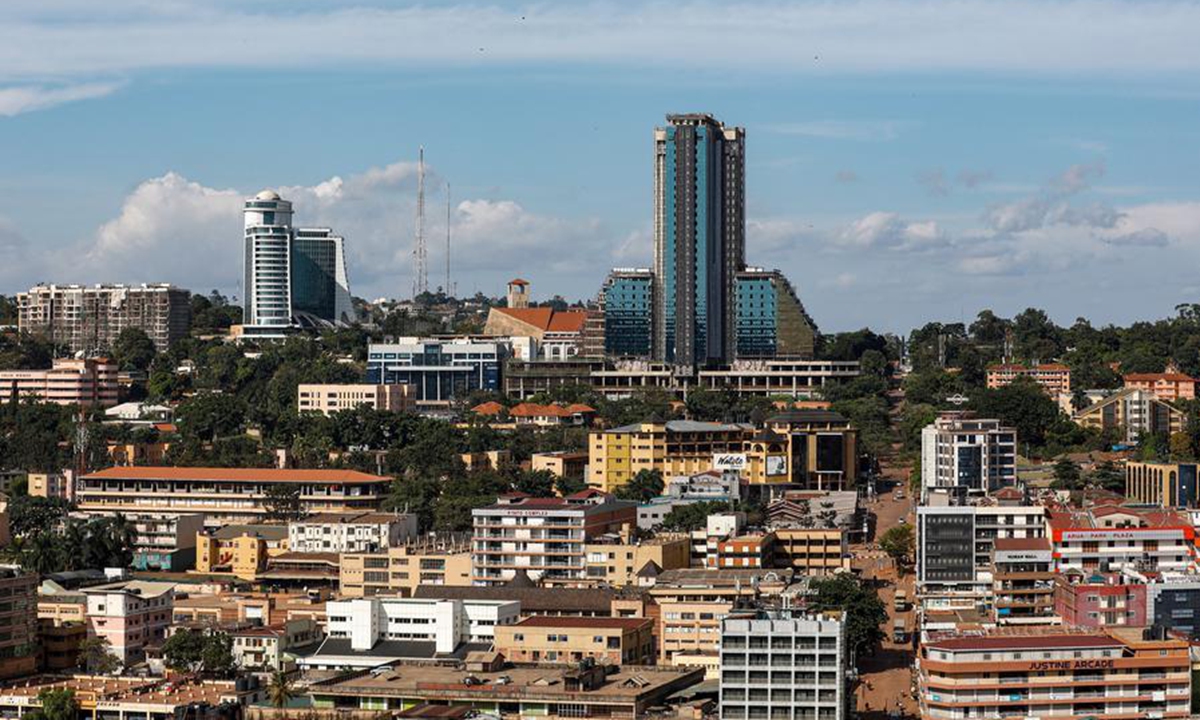
This photo shows a city view of Kampala, Uganda. Photo: XinhuaTravelers from the Taiwan region are being cautioned against traveling to Uganda after reports that several Taiwan residents had their travel documents issued by the Taiwan authorities seized or were denied entry in early August, amid a series of moves recently in Africa related to the one-China principle. A mainland expert noted that the more "Taiwan independence" forces seek international space, the narrower their room for maneuver will become.
According to Taiwan regional media outlet United Daily News (UDN) on Saturday, a Taiwan resident holding a valid Ugandan work permit had his so-called "passport" confiscated by Ugandan immigration officials on August 3 after arriving at Entebbe International Airport (EBB) on a domestic flight. The officials cited a "new policy" but have yet to return the "passport."
In a separate but similar incident, another Taiwan regional resident was also denied entry by Ugandan immigration officials at EBB and deported on the same flight, according to UDN.
The two incidents occurred at the same airport within a short period of time, with the authorities' actions escalating from the confiscation of travel documents to outright denial of entry and deportation, a travel agency was quoted by the report as saying.
The developments suggest that the measures being taken by Ugandan authorities may go beyond isolated incidents and could represent a systematic pattern of enforcement targeting people from the region, with signs that the situation is "continuing to escalate," per the report by UDN.
However, so-called Taiwan regional foreign affairs authorities stated that the relevant cases may be connected with the measure rolled out by the Taiwan region to temporarily suspend visa issuance to Ugandan nationals and bar their entry amid the worsening Ebola epidemic, according to Taiwan's local media CNA, adding it will keep negotiating with Uganda and offer support to impacted people.
Prior to this incident, several African countries had already adjusted their wording and entry policies concerning Taiwan region. According to a previous UDN report in July, on the registration page for South Africa's Electronic Travel Authorization (ETA) system, Taiwan is listed as "Taiwan, China" in the dropdown menu for place of issue of travel documents. Similarly, the international dialing code +886 is marked "Taiwan, China" under the phone number section.
That same month, the Moroccan Embassy in Japan suspended its Visa Confirmation Letter (VCL) review process for travelers from Taiwan region starting July 23, while the regional authorities stopped accepting visa applications from Moroccan nationals in retaliation, according to CNA.
But some netizens from the island commented that they had "gotten used to this situation". One remarked, "It was Papua New Guinea a few days ago, and now Morocco again. Taiwan's foreign affairs department sure has an easier job these days."
After the government of Papua New Guinea announced the closure of the "Taipei Economic Office in Papua New Guinea," Chinese Foreign Ministry spokesperson Lin Jian also said during a press conference on July 16 that China highly commends the decision and it demonstrates once again that upholding the one-China principle is where international public opinion trends and the arc of history bends.
Earlier in April, three African countries, Seychelles, Mauritius, and Madagascar revoked flight permit to cross their countries without prior warnings before regional leader Lai Ching-te's planned trip to Eswatini.
Zheng Jian, a professor at the Graduate Institute for Taiwan Studies at Xiamen University in East China's Fujian Province, told the Global Times that the Democratic Progressive Party (DPP) has pushed to internationalize the Taiwan question and expand "Taiwan independence" activities abroad, directly challenging the one-China principle widely upheld by the international community and provoking pushback.
International community, including African countries, would not choose to support "Taiwan independence" in their diplomatic decisions, and the more the separatists seek international space, the narrower their room for maneuver will become, the expert noted.
Against the backdrop of the one-China principle, attributing such entry restrictions solely to the Ebola-related policy would amount to misplaced wishful thinking, he said. In truth, DPP authorities should not ignore that all the setbacks Taiwan region faces internationally nowadays are brought about by "Taiwan independence" separatist activities, Zheng said.
A spokesperson from Taiwan Affairs Office of the State Council, Zhang Han, said during a press conference on July 22 that facts have proven time and again that the one-China principle is a basic norm governing international relations and a universal consensus among the international community.
"Upholding the one-China principle aligns with righteousness and represents the irresistible historical trend. A just cause gains wide support, whereas an unjust one garners little backing. The DPP authorities stubbornly adhere to their separatist 'Taiwan independence' stance. Acting against the tide of history, they will only encounter repeated setbacks internationally," Zhang added.
。
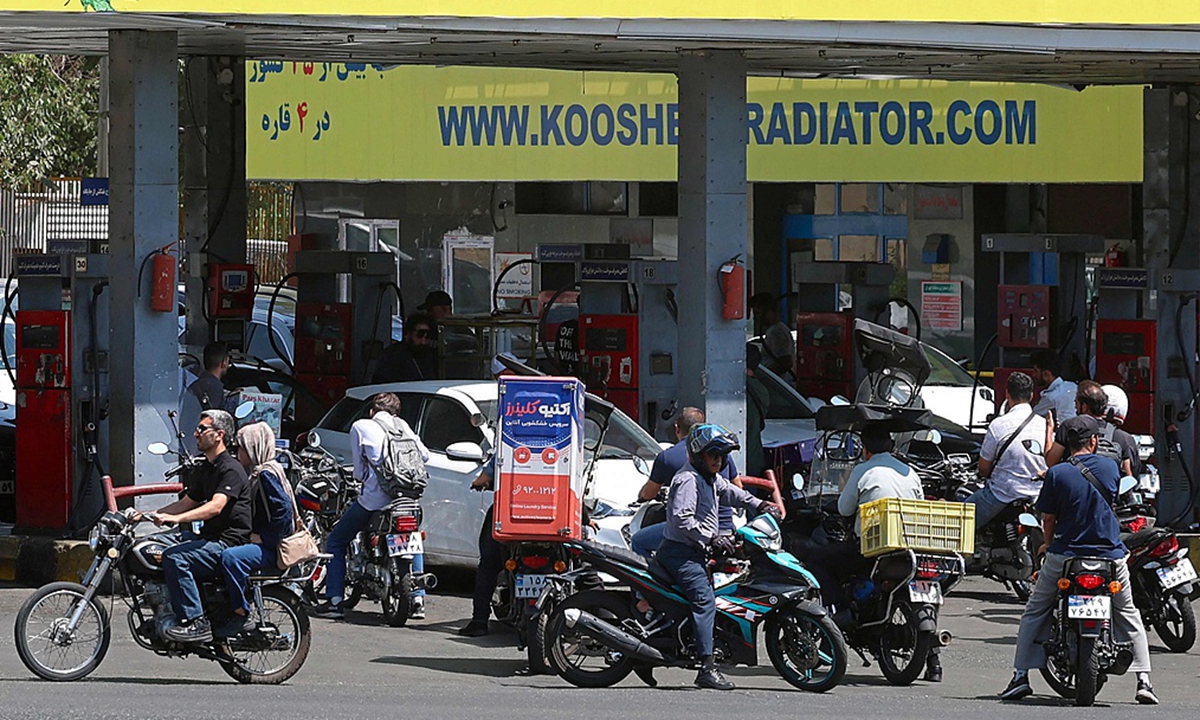
Drivers queue at a petrol station to refuel in Tehran, on August 25, 2026. Photo: VCG
As military strikes and diplomatic negotiations have both failed to bring an early end to the roughly six‑month‑old US-Iran conflict, Washington rolled out new sanctions against Tehran on Monday local time intended to further strangle its economy. Iran, for its part, has vowed a tougher pushback.
In a news conference on Monday, Treasury Secretary Scott Bessent threatened new sanctions on countries refusing to cut economic ties with Iran, following recent rhetoric from Washington threatening an "economic D-Day" for Iran.
Meanwhile, the Office of Foreign Assets Control (OFAC) under the US Treasury announced secondary sanctions on nearly 60 entities, individuals, and vessels in multiple jurisdictions which, according to the US' claims, enable Iran's activities, including so-called nuclear and missile technology procurement, cyber operations, and oil-revenue generation networks.
According to Reuters, those sanctions targeted businesses in China, the UAE, Singapore and several other countries, including a cooking-oil refinery in France, but did not include any of the Chinese financial institutions suspected of facilitating Iran's oil trade.
In response to US Treasury Secretary Scott Bessent laying out plans for economic asphyxiation of Iran, expanding Washington's secondary sanction threats and warning of dire consequences for countries that do not join the campaign, Chinese Foreign Ministry spokesperson Lin Jian said at a press briefing on Tuesday that China has made clear on many occasions its firm opposition to illicit unilateral sanctions that have no basis in international law or the authorization of the UN Security Council.
"Economic warfare and maximum pressure provide no solution. On the contrary, they only serve to fuel tensions and lead to risk spillover, which will disrupt the global economic and financial order, and harm the legitimate rights and interests of other countries," the spokesperson said.
The pressing task is to facilitate the deescalation of the situation and return to dialogue and negotiation as soon as possible, Lin said, adding that China will do everything necessary to firmly safeguard its rights and interests, Lin added. Lin also said China's cooperation with Iran is conducted within the framework of international law, thus should not be disrupted.
When asked whether China has received any such timeline, as the US stated it would give countries a timeline on when to shut down the actions that it has identified, and how China intends to respond to the relevant announcements by the US Treasury involving China-based entities and individuals, Chinese Foreign Ministry spokesperson Lin Jian stated on Tuesday that China is closely following the developments, and will do everything necessary to firmly safeguard our rights and interests.
In May this year, China's Ministry of Commerce issued a blocking ban prohibiting any recognition, enforcement or compliance with US sanctions imposed on five Chinese companies on the grounds of their alleged involvement in Iranian petroleum transactions.
Relying on its financial hegemony and long‑arm jurisdiction, the US enforces unilateral sanctions with no basis in international law. Such measures severely undermine fundamental consensus for international trade and erode the existing international order, Zhou Mi, senior research fellow at the Chinese Academy of International Trade and Economic Cooperation, told the Global Times on Tuesday.
In essence, Washington is imposing its Iran‑focused policies to enterprises across the globe, compelling third‑party actors to fall in line with its diplomatic objectives, Zhou noted.
The latest sanctions would affect a broader range of countries, industries and firms. They will not only draw wider opposition from the international community, but also boomerang on the interests of US‑owned enterprises, he added.
Fewer levers left "We are launching an economic onslaught against Iran's financial connections around the globe," Bessent claimed at a press conference. "Our objective is to sever every economic lifeline" that sustains the country, he said, according to a Treasury release.
The US Treasury Department said in a release that the new sectoral sanctions determinations target five critical sectors - digital assets, technology, gold, aviation and shipping - that the US claimed Iran has relied on to support its economy.
US Treasury claimed that "any entity that facilitates money laundering or sanctions evasion on behalf of Iran risks being cut off from the US financial system."
OFAC also suspended several general licenses that previously authorized certain remittance payments to Iran and Iranian access to the US cultural and academic system. The office also issued additional guidance on the so-called sanctions risks of bowing to Iranian demands related to shipping in the Strait of Hormuz.
Mohammad Mokhber, an aide to Supreme Leader Mojtaba Khamenei, said in an X post on Monday that Iran's response to US sanctions and pressure will be "more decisive than before."
Iranian Economy Minister Ali Madanizadeh said that Tehran "is and was ready," with a two-year plan to counter Washington's new sanctions. He told state television that "it seems they wished to suffer yet another defeat," per an AFP report.
Iranian Parliament Speaker Mohammad Bagher Ghalibaf responded in an X post that "the Americans know no one will believe their nonsense," noting that the US is not in a position economically to restrict its relations with other countries.
Alan Eyre, a distinguished diplomatic fellow at the Middle East Institute, told NBC News that after six months of combat, the US government "has few remaining levers it can use to convince Iran's major trading partners to materially reduce their economic ties."
While Washington's maximum‑pressure campaign may deliver short‑term shocks to Iran's economy, it can hardly "strangle" the country completely, said Liu Zhongmin, a professor at the Middle East Studies Institute of Shanghai International Studies University.
He added that Iran's economic resilience cannot be underestimated. Having borne decades of crippling sanctions from the US and Western nations, Tehran has built substantial experience in sanction‑busting and developed coping mechanisms ranging from basic‑industry self‑reliance and regional trade networks to oil‑for‑goods swaps and non‑US dollar‑denominated trade. Furthermore, the Strait of Hormuz remains a source of strategic leverage for Iran to push back against US pressure.
The expert said that Tehran and Washington are encountering "a battle of wills," and Iran believes the economic costs the US would suffer from a Hormuz blockade would outweigh the damage inflicted on Iran by sanctions.
Washington's "economic strangulation" policy risks ending in failure unless it yields short‑term outcomes, particularly securing the opening of the Strait of Hormuz, Liu added.
Self-created dilemmaAs the US ramps up pressure on Iran, Americans are growing averse to a protracted war.
According to a Reuters/Ipsos poll that closed on Monday, US public approval of the war with Iran fell to its lowest level since the conflict's early days, with just 31 percent of Americans supporting US military action.
On June 18, the US and Iran signed an MoU, under which the two were scheduled to hold negotiations within a period of 60 days, which ended on August 17, to reach a final agreement. However, the talks' fate remains unclear following renewed escalation between the two countries.
Iranian political analyst Mostafa Khoshcheschm told Al Jazeera that the new US sanctions intended to create an "economic onslaught" were a "political show" of intimidation.
Liu said that by resorting to an "economic strangulation" tactic after miring itself in a fruitless military quagmire over Iran, the US has laid bare its practical predicament and strategic dilemma, and seemingly running out of cards.
Citing sources, CNN reported earlier this month that the US military has exhausted nearly 80 percent of its interceptors for a key missile defense system as senior US military commanders are warning that the Pentagon's munitions stockpile is "dangerously low."
Faced with depleted ammunition stockpiles and insufficient military‑industrial capacity, and amid growing domestic criticism of its Middle East policy, the White House has opted for tough economic measures against Iran, Liu said. "Less costly than military coercion, such moves help Washington strike a tough posture before voters and shun political risks from further military escalation," said the expert.
There is, however, an increasingly obvious paradox in Washington's economic warfare against Iran: the tighter the sanctions, the tighter global energy supplies become, and the higher costs borne by American consumers and businesses, the expert added.
。
Current article:http://9opw48k.runtunpaixufenjuduishuang.pics/list_b6olu/wt9y.html
Published on:04:13:08